


Employment Discrimination Attorney in Chicago
Advocating for Workers Facing Unfair Treatment in Illinois
At The Prinz Law Firm, we focus a large part of our practice on discrimination in employment and wrongful termination claims. As you may or may not know, employers are prohibited from using any protected classes as a basis for an employment decision. An employer that terminates an employee for reporting or opposing a discriminatory act may also be liable for wrongful termination.
This is true regardless of whether the employee makes a report to Human Resources, his/her supervisor, an attorney, the United States Equal Employment Opportunity Commission, the Illinois Department of Human Rights, the Cook County Human Rights Commission, or any other state or administrative agency.
Contact our firm online or call (312) 345-6603 today to schedule your initial consultation with our Chicago discrimination lawyers.
Working to Prevent Employment Discrimination
Employment disputes can often be complicated and difficult, requiring the assistance of a knowledgeable Chicago attorney. It can be devastating to be wrongly discharged after you have dedicated yourself completely to your profession.
Our caring attorneys understand the emotional trauma that an employment dispute can entail. We advise clients on how to minimize the financial and emotional costs and work to identify long-term resolutions. There are certain protections that exist to prevent employment discrimination in special cases.
Protected classes include the following:
- Race
- Gender
- National origin
- Age
- Disability
- Pregnancy
- Marital status
- Sexual orientation
- Military service
- Parental
Recent 2025 Updates to Discrimination Laws
In 2025, there have been significant changes in federal employment discrimination policies. Notably, the U.S. Equal Employment Opportunity Commission (EEOC) announced a rollback of anti-discrimination protections for transgender individuals, following a recent executive order. This includes the removal of trans-inclusive measures and a halt in processing claims related to sexual orientation or gender identity discrimination.
Additionally, the administration has ordered the termination of federal diversity, equity, inclusion, and accessibility (DEIA) programs, affecting many civil servants involved in these initiatives. This action has raised concerns about the future of workplace diversity and inclusion efforts.
It's important to note that while federal policies are shifting, Illinois maintains robust protections under the IHRA. State laws continue to safeguard against discrimination based on sexual orientation, gender identity, and other protected characteristics. Employers in Illinois are still required to adhere to these state laws, ensuring a commitment to workplace equality.
Understanding Common Types of Workplace Discrimination in Chicago
Recognizing the various forms of workplace discrimination is a key step in protecting your rights as an employee or employer. Discrimination can affect employees across industries in Chicago and may involve issues with hiring, pay, promotions, job assignments, or terminations. Each situation is unique, but understanding the common categories can help you identify potential unlawful conduct and know when to seek legal advice.
A discrimination attorney at our can assist you in facing issues related to race, gender, age, disability, religion, and more. For example, discriminatory practices might include denying reasonable accommodations required by law or retaliating against employees for reporting harassment. These cases often require careful documentation and familiarity with both federal and Illinois-specific statutes.
When handling workplace discrimination claims, our attorneys are know how complaints are processed at local agencies like the Illinois Department of Human Rights in Chicago. We are also familiar with hearings at the Daley Center and can help guide clients through the process. If you believe that discrimination has occurred in your workplace, it is important to consult with someone who understands both the legal requirements and the unique dynamics present in the Chicago area.
Examples of Discrimination That May Warrant Legal Action
Some common examples of situations where a workplace discrimination lawyer may be able to assist include:
- Being denied a promotion based on your inclusion in a protected class
- Harassment or hostile work environment targeting protected traits like gender, race, or religion
- Termination or demotion that appears tied to discrimination instead of job performance
Filing Successful Discrimination Claims in Chicago
Discrimination claims can often be especially complex because it can be difficult to discern whether an employer's decision to fire, not hire, or not promote is based on the employee's status as a protected class. An attorney should examine all aspects of an employee's employment and performance before advising a client on the merits of a claim.
If you have been fired for complaining about any of these common types of discrimination, please reach out to us to consult with a Chicago employment discrimination attorney from The Prinz Law Firm.
Learn More About Discrimination Claims
- Illinois Discrimination Laws Protect Transgender Citizens
- Pregnancy Discrimination: Do You Know Your Rights?
- Here's What You Should Know about Age Discrimination
- EEOC Settles Religious Discrimination Lawsuits
- Job Discrimination Based on Sexual Orientation
Make an appointment with a qualified discrimination attorney in Chicago at The Prinz Law Firm. Dial (312) 345-6603 or complete our online form to request a consultation with a lawyer near you.

Discrimination Law FAQs
How do federal changes in 2025 affect my rights in Illinois?
Federal policy changes in 2025 do not eliminate protections provided by Illinois law. The Illinois Human Rights Act (IHRA) continues to prohibit employment discrimination based on protected characteristics and may provide broader protections than federal law. Your rights can depend on the specific conduct, employer, and circumstances involved. An attorney can help determine which state and federal protections may apply.
What should I do if I experience workplace discrimination?
If you believe you have experienced workplace discrimination, document what happened, including dates, communications, witnesses, and employment decisions. You may also consider reporting the conduct through your employer's procedures or filing with the Illinois Department of Human Rights (IDHR) or EEOC, depending on the circumstances and applicable deadlines. Consulting an employment discrimination attorney can help you understand your options and preserve potential claims.
Are there protections for LGBTQ+ employees in Illinois?
Yes. The Illinois Human Rights Act prohibits employment discrimination based on sexual orientation and gender-related characteristics, including gender identity. Federal law also provides protections against discrimination based on sexual orientation and gender identity in employment. If you believe you have experienced LGBTQ+ workplace discrimination in Chicago, a discrimination lawyer can help you evaluate the circumstances and determine what legal options may be available.
Can I be discriminated against because of my arrest record?
Illinois law provides protections concerning the use of arrest records in employment, but the rules are more nuanced than a blanket prohibition on every employment decision involving an arrest record. Employers may have limited circumstances in which criminal-history information can be considered. If you believe an arrest record affected a hiring or employment decision, a discrimination lawyer in Chicago can help assess whether the employer's conduct complied with Illinois law.
Our qualified workplace discrimination attorney is ready to help you. Get in touch via online form to make an appointment right away.


The Prinz Law Firm's Podcast
-
 Episode 53 – Can I Be Harassed at Work by AI?
 -
Episode 52 – What Will a New Bill Change for Student Athletes?
-
Ep. 51 – What the Bears Teach Us About Negotiating on Home Turf
-
Ep. 50 – Is Your Communication Style Working in the Workplace?
-
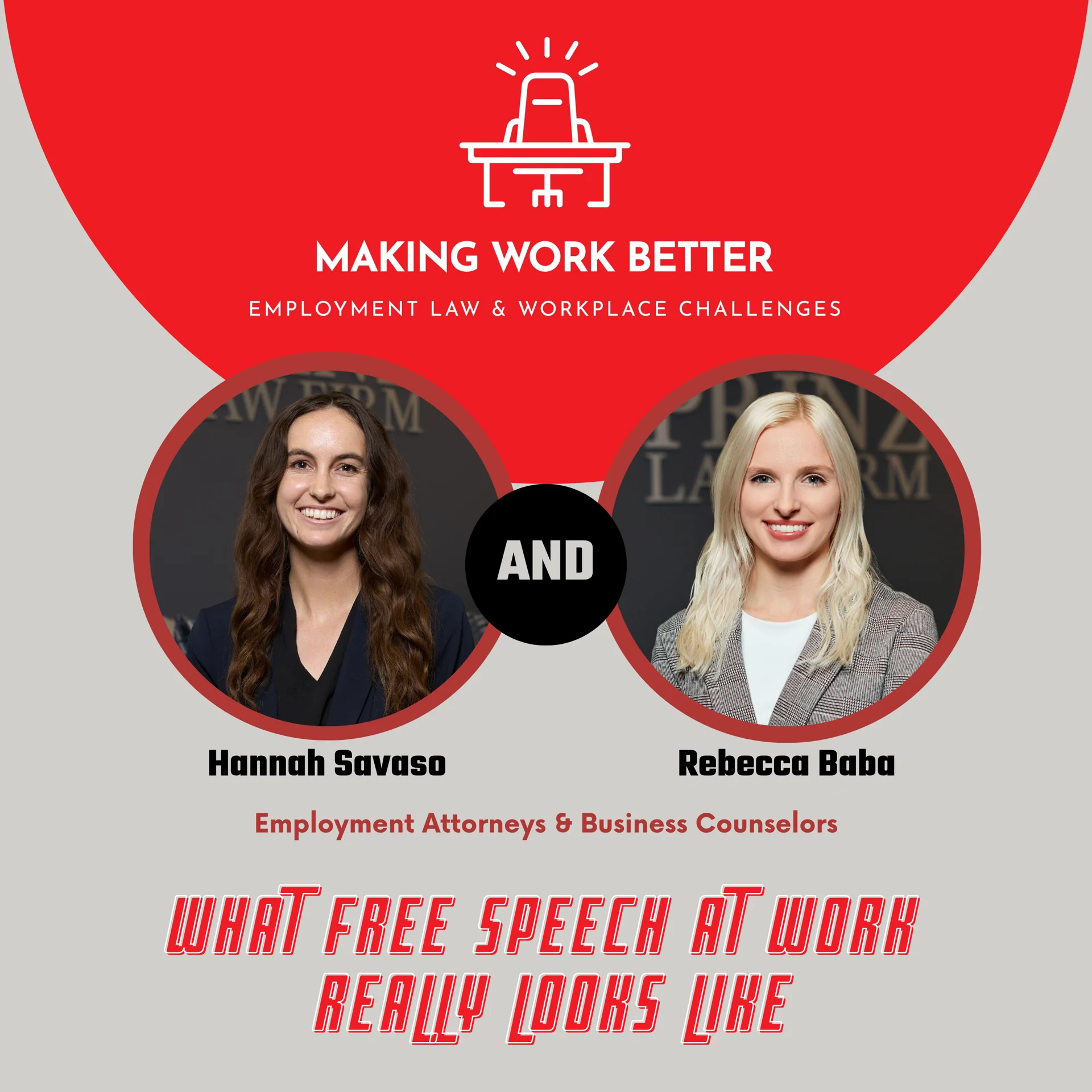
Ep. 49 – What Free Speech at Work Really Looks Like
-
Ep. 48 – What Can We Learn from Noma's Abuse Controversy?
.png.2609081001385.webp)
.png.2608281244513.webp)
.png.2608030731214.webp)
.png.2606290854327.webp)
.png.2604281406308.webp)