
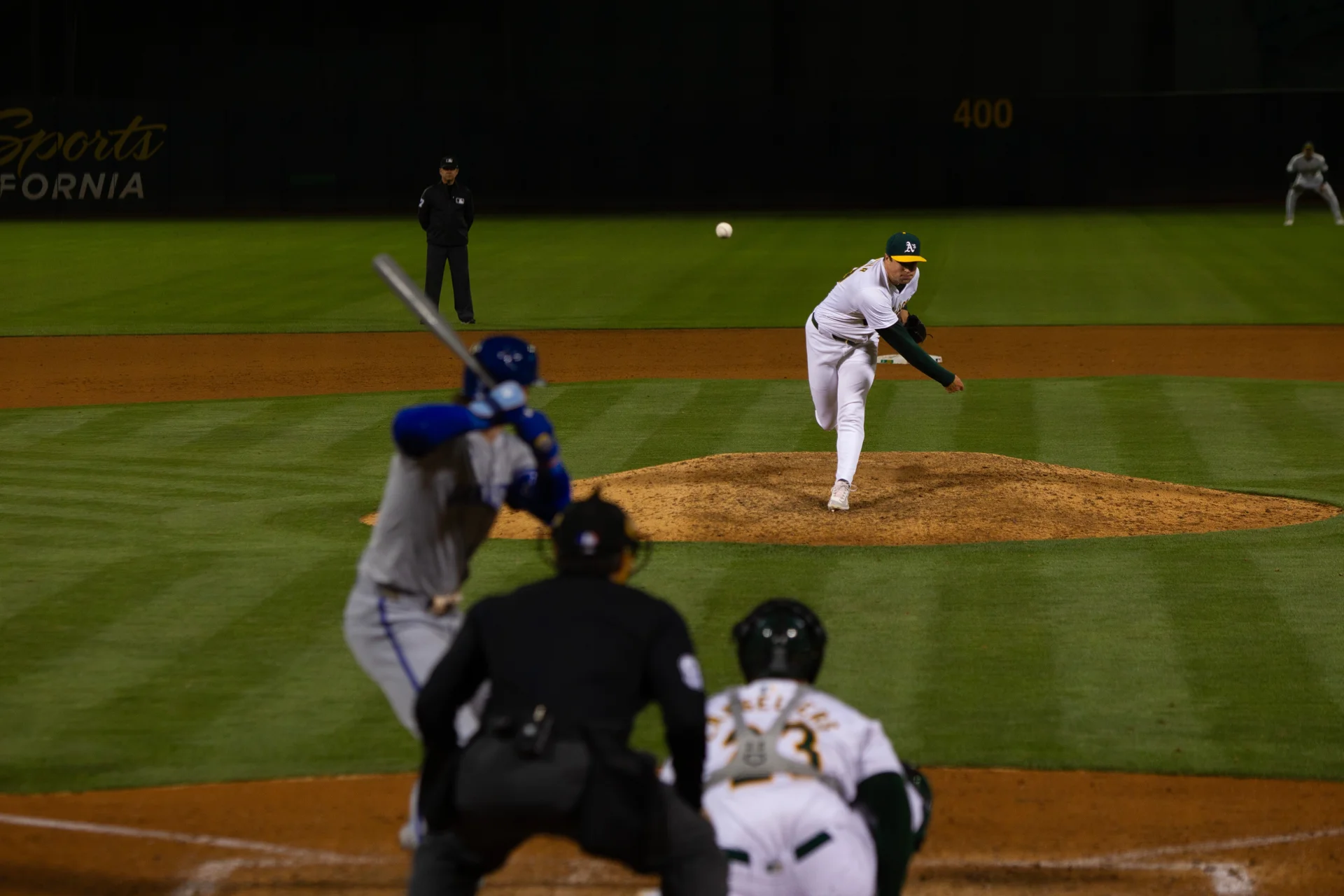
The 2026 Major League Baseball season wrapped in a way few expected back in spring, with the Milwaukee Brewers defeating the Tampa Bay Buccaneers in this year’s World Series. Now, with the league’s current collective bargaining agreement expiring on December 1, all eyes are on the negotiations between MLB and the Major League Baseball Players Association (“MLBPA”) —which are already so contentious that a lockout looks likely.
The players most affected by many of baseball’s employment rules are not its superstars, but the younger athletes: those under team control, earning at or near the league minimum salary, and may spend part of a season shuttling between major- and minor-league clubhouses. From this perspective, baseball’s brewing labor fight starts to look a lot more like an ordinary workplace dispute over wages, mobility, job security, and bargaining power.
What Is MLB Fighting About?
To address the Dodger-shaped elephant in the room, the main issues are a hard salary cap and a salary floor. Under the league’s initial proposal, teams would be required to spend at least roughly $171 million, but no more than $245 million, on payroll in 2027. MLB ownership says the system would improve competitive balance, particularly given the enormous payroll gap between big-market versus lower-revenue clubs.
Of course, this argument is undermined by the fact that two low-spending, small-market teams faced off in the 2026 World Series. Still, the competitive balance concern is not imaginary. A fan in Los Angeles or New York can reasonably expect ownership to spend aggressively on winning, while fans of smaller-market teams have learned their owners may have very different goals. The question is whether restricting what the biggest spenders can pay players is the right fix—and the MLBPA says no. Instead, the union has proposed measures to push low-spending teams to invest more in their rosters, including:
- Implementing a "competitive integrity tax" for low-payroll teams and changes to revenue sharing
- Raising the luxury-tax threshold, while sharply increasing the Major League minimum salary
- Expanding arbitration eligibility and free agency timelines for high-performing young talent
That difference reflects a basic divide in how the two sides see baseball’s economic problem: the MLB blames the highest-spending teams for spending too much, while the union argues too many teams spend too little.
Aren’t Baseball Players Already Rich?
Some are, without question. Major League Baseball produces a small group of extraordinarily well-paid stars, like Shohei Ohtani or Juan Soto, whose salaries look nothing like those of almost any other American worker. However, these superstars are a tiny minority of MLBPA membership. The 2026 major league minimum salary is $780,000, which is (obviously) a lot of money. But players generally do not reach unrestricted free agency until they accumulate six full years of major league service, with very little negotiating power over what they are paid prior.
Additionally, players on a major-league team's roster can be “optioned,” or sent down to the minor leagues, as many as five times in a single season. But the difference between spending a month with the Chicago Cubs and spending it with the Triple-A Iowa Cubs carries substantial economic consequences. A player on a split or minor-league contract earns a major-league salary on a prorated basis while he is in the majors, but a dramatically different salary while he is in the minors:
- In 2026, an optioned player on his first major league contract earns a minimum minor league salary of $63,600.
- A player on a second major league contract has a $127,100 minimum while in the minors.
Being called back and forth between teams also means scrambling to find short-term housing, leaving teammates and family behind on short notice, and knowing the next roster move may be outside the player’s control. That is a long way from the popular image of the baseball player with a nine-figure guaranteed contract.
The Players Want More Leverage Earlier in Their Careers
Maybe the most revealing part of the MLBPA’s bargaining position is how much of it focuses on players who have not yet landed enormous free-agent contracts. The union’s core pre-free-agency priorities include:
- Increasing the major league minimum salaries to $1.5 million in 2027
- Doubling the percentage of players between two and three years of service who qualify for salary arbitration
- Increasing the pre-arbitration bonus pool from $50 million to $180 million to reward young elite players with free agency earlier
A structural shift is important because under baseball’s compensation system, a player can become one of the best performers in the sport before reaching true free agency, while earning a fraction of what an established free agent would receive for comparable (or lower) performance. This point of disagreement is not about how many millions should go to established stars, but rather when workers acquire bargaining power.
Owners have good reason to value a system that lets teams develop young players at fairly predictable costs, while the union has good reason to want players to receive a larger share of their economic value before their careers are half over—or, as happens to many players, before their Major League careers end at all.
What About Minor League Players?
Minor league players now have their own collective bargaining agreement, reached in 2023 after unionizing under the MLBPA umbrella. That historic deal more than doubled minimum salaries at several levels and improved housing, medical, and other working conditions. Consequently, current major league CBA negotiations do not directly set the wages of every minor leaguer. However, there is a substantial gray area between “minor leaguer” and “major league star.”
Could These Negotiations Actually Disrupt the 2027 Season?
Absolutely—and baseball fans have seen this movie before. The current agreement expires December 1, 2026. If the parties do not reach a new deal, owners are widely expected to lock out the players. MLB commissioner (and former employment lawyer) Rob Manfred has said the 2027 season stands to go on as scheduled and noted that both parties meet regularly. Yet the economic difference remains substantial.
The Bottom Line
Major League Baseball enjoyed strong attendance and renewed fan interest in 2026, and a prolonged work stoppage would risk throwing that momentum away. The problem is, everyone involved acknowledges that risk. But collective bargaining requires all parties to agree on who gets what, and their positions are far apart as of this writing.
Professional baseball is an unusual workplace. Its employees can throw or hit 100-mile-per-hour fastballs; its employers own billion-dollar entertainment franchises; and its contract negotiations get dissected on national newscasts like ESPN. Strip away the stadium lights, however, and the core legal questions are surprisingly ordinary:
- Who is entitled to multi-billion-dollar value created by daily labor?
- How long can an employer control an employee's compensation and mobility?
- At what point in their career does a worker acquire fair-market negotiating leverage?
Those are fundamental labor questions, whether the workplace is an office building, a factory floor, or Wrigley Field. When the next baseball labor battle gets reduced to fabulously wealthy players fighting fabulously wealthy owners, remember the middle-reliever packing another suitcase for Triple-A. That player may be closer to the center of baseball’s labor story than the superstars with headline-sized contracts.