

On April 10, 2026, The San Francisco Chronicle published a story containing allegations of a former staffer who worked for then-Congressman Eric Swalwell from 2019–2021, alleging that while she was employed be him, he had solicited sexual acts from her and assaulted her while she was intoxicated. The Chronicle noted her account was corroborated by medical records and contemporaneous witnesses. Later that day, CNN published a follow-up report expanding the scope of accusers from one to four, with additional accusers alleging that Swalwell sent them unsolicited explicit messages and other misconduct. Swalwell, who has denied all allegations, resigned from Congress shortly thereafter. The House Ethics Committee launched an investigation, as did the Manhattan District Attorney.
These allegations and the resulting fallout in Congress have once again prompted a familiar national conversation about sexual misconduct, abuse of power, and institutional accountability. But these discussions too often focus on the allegations themselves while overlooking the deeper and more important question: Why do these situations continue to occur so repeatedly inside institutions that already have policies, training programs, reporting systems, and investigative procedures in place?
As someone who regularly conducts workplace investigations and culture assessments, I do not believe the answer is simply that organizations “need more policies.” In many cases, organizations already have policies on paper that appear entirely adequate. The real issue is structural: systems designed to investigate misconduct are not truly independent from the systems designed to protect institutional leadership. When employees perceive that reality, reporting collapses.
The Reporting Futility Problem
Employees rarely take formal action to report workplace misconduct. In my experience, the decision not to report is rarely rooted in indifference. Rather, it reflects the very real personal and professional consequences that reporting can bring, such as retaliation, reputational harm, workplace isolation, and uncertainty about whether anything meaningful will happen after the report.
Most employees that I have worked with, especially those in a more senior position, make an internal calculation before deciding whether to speak up: Will anyone believe me? If an investigation is conducted, will it actually be independent? Will leadership protect the accused? When the answer to those questions appears unfavorable, employees often remain silent. This phenomenon is particularly pronounced when allegations involve senior leadership, founders, rainmakers, or individuals who hold significant institutional power.
Congress’ Complaint Structure Is Problematic
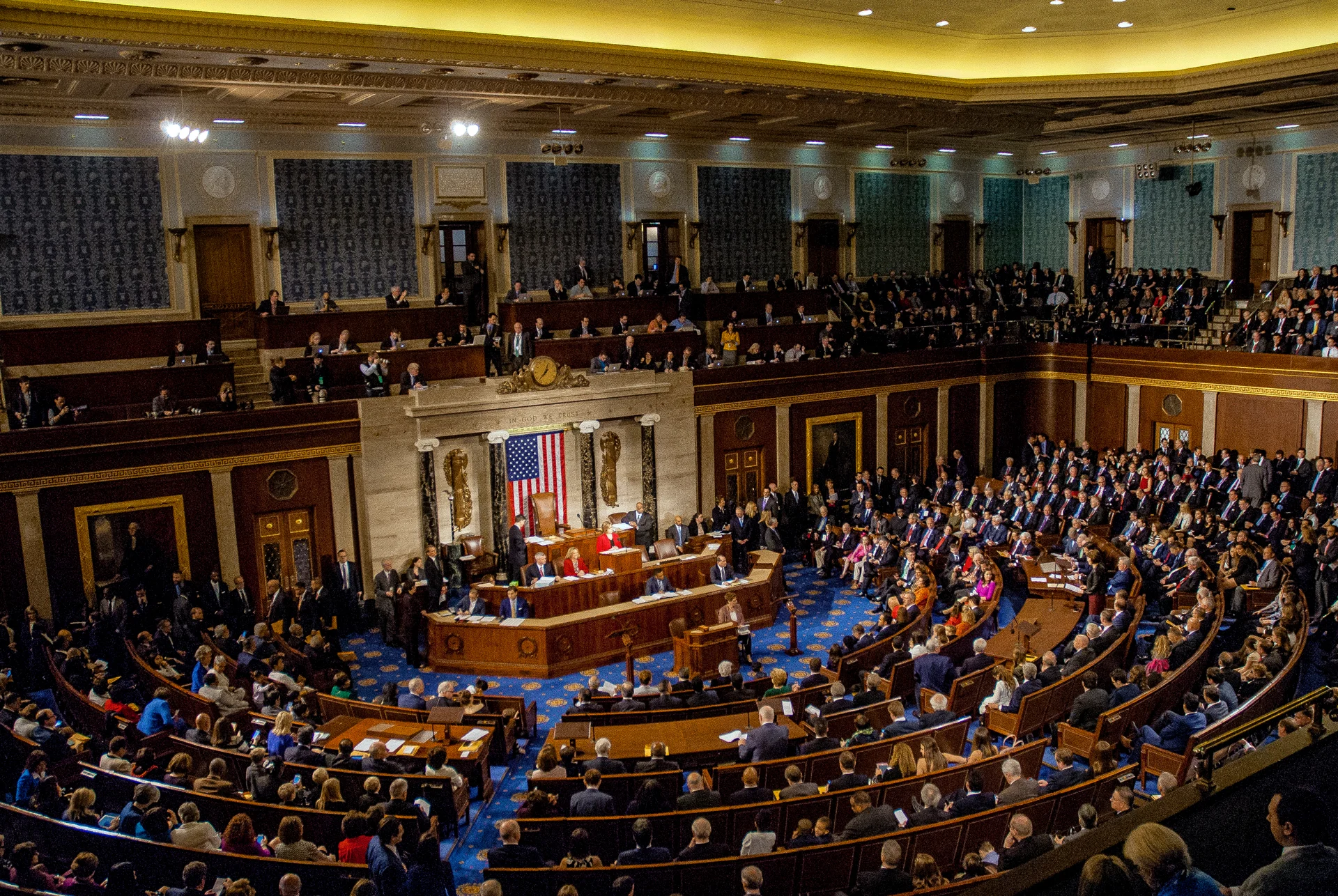
Congress itself offers a revealing example of how institutional structure can shape employee trust in reporting systems. In the House of Representatives, the Office of Congressional Conduct (“OCC”) (f/k/a Office of Congressional Ethics) may conduct a preliminary review or investigation when complaint or allegation emerges. If warranted, the OCC (which has no disciplinary authority) refers the matter to the House Ethics Committee, which ultimately determines whether discipline is appropriate, including reprimand, censure, or recommendation for expulsion.
On paper, this structure appears to incorporate independent review. However, Congress still largely controls its own accountability process. The Ethics Committee, which is composed of members of Congress themselves, retains the ultimate authority over disciplinary outcomes. As a result, critics have long argued that Congress effectively investigates itself, or at least appears to do so, and public perception matters.
Congress Is Not Unique
The current scrutiny surrounding Congress reflects many of the same structural issues that exist in private workplaces across the country. Whether in large organizations or smaller companies, HR departments and internal investigators operate under difficult structural constraints. They may have to report directly to leadership, they may depend on that leadership for their own continued employment, they may lack authority to impose meaningful corrective action, and they almost always face pressure (explicit or implicit) to minimize institutional risk exposure. We’ve often seen that this means circling the wagons around senior leaders or rainmakers.
This creates a perception among employees that the investigative process exists not primarily to protect employees, but to protect the organization itself. Importantly, that perception alone can significantly discourage reporting. And in some cases, employees are not wrong. Organizations sometimes unintentionally design systems that prioritize managing liability and reputation over honestly identifying and correcting cultural problems. Nothing can deteriorate employee trust more quickly than investigations that are performative rather than corrective.
Culture Audits as a Solution
I believe the most valuable tool for getting out of the loop of uncritical self-policing is a culture audit. Culture audits are similar to workplace investigations, but broader: they strategically explore the behaviors and values of a workforce that comprise an organization’s culture. An audit has the power to uncover and describe the culture that really exists in an organization, but it also can detect and mitigate risks and identify ways to align a business with its stated values.
One of the most beneficial aspects of a culture audit is that it can frequently uncover the disconnect between what leadership believes employees experience and what employees actually believe about organizational accountability. Further, a culture audit has the power to identify any disconnect between what the policies say and how they are practiced.
On paper, many organizations appear to have robust structures in place to prevent misconduct, such as anti-harassment policies, training programs, multiple reporting channels, and HR procedures and investigation protocols. However, employees do not judge organizational integrity primarily by the existence of reporting channels or written policies. They judge it by whether the system appears capable of holding powerful individuals accountable. Culture audits often reveal that employees perceive reporting as futile, that investigations are biased, that leadership is insulated from consequences, and that retaliation is likely, even if subtle. Importantly, these perceptions may exist even where leadership genuinely believes the organization has implemented appropriate safeguards.
What’s more is that traditional channels used by employers (engagement surveys, for example) can’t often reach the heart of the issue. Employees are often far more candid in confidential culture audit interviews than they are through formal reporting channels. Confidential interviews permit the employees freedom to answer outside the scope of a “survey” scheme, which very often yields useful data beyond the scope of what the organization sets out to ask, and insight into what’s coming up for employees before growing into a larger disruption to peace, performance, and workplace culture.
In many organizations, the most serious risk indicators are not necessarily the complaints that are filed, but the concerns that employees no longer believe are worth reporting. In healthy organizational cultures, employees believe that someone with real authority will take a report of misconduct seriously. Without that belief, even sophisticated compliance systems lose credibility. This sort of information can only be uncovered through a culture audit.
What Real Accountability Requires
Reducing workplace misconduct, be it in Congress or private industry, requires more than policy revisions after public scandals. It requires structural credibility, which means truly independent investigations, meaningful anti-retaliation enforcement, transparent accountability measures, independent reporting channels, and leadership willing to prioritize institutional integrity over personal or political protection.
Most importantly, it requires organizations to confront an uncomfortable reality: the greatest risk to workplace culture is often not the existence of misconduct itself, but the perception that the system will protect the powerful rather than address the problem. Until organizations meaningfully address that perception, these cycles will continue to repeat themselves—in Congress, in corporations, and in workplaces of every size.