


Chicago Pregnancy Discrimination Attorney
Fighting Against Discrimination in the Workplace
Pregnancy discrimination occurs when a woman experiences any form of negative treatment due to pregnancy, childbirth, and/or a medical condition related to either pregnancy or childbirth. It is unlawful for employers to discriminate on the basis of pregnancy in any work situation, including a temporary disability which may arise during pregnancy or shortly after childbirth.
In these situations, the female employee should be treated just like another temporarily disabled employee. In other words, your employer is required to work with you and allow you to perform modified job duties. If you have suffered this type of discrimination you may have grounds for a claim.
The negative treatment can include a host of adverse employment actions in connection with:
- Hiring
- Firing
- Pay
- Job assignments
- Promotions
- Layoffs
- Training
- Benefits

Dedicated Legal Guidance
At The Prinz Law Firm, we recognize the unique challenges faced by women in Chicago, whether you work in the bustling downtown area or reside in the quieter suburbs. We understand that no two situations are alike, and that pregnancy discrimination can manifest in various ways—be it a lack of accommodations, wrongful termination, or unequal treatment. Our team can help you navigate the complexities of pregnancy discrimination and advocate for your rights.
If you believe you are experiencing unfair treatment or discrimination in the workplace, don’t hesitate to reach out to our firm for a free consultation. Your rights matter, and we are fully committed to upholding them, so you can focus on your health and well-being during this important time in your life.
Why Hire Our Chicago Lawyer?
A Chicago attorney from The Prinz Law Firm can guide you throughout the lawsuit process and ensure that you have grounds for a claim. We truly care about your rights as an employee and work to see that they are not being violated.
There are many different rights and benefits you may not even be aware of if your employer has not done the right thing and alerted you. Regarding benefits such as leave and/or health insurance, a pregnant woman must be treated the same as other employees requesting leave or applying for health insurance.


The Prinz Law Firm's Podcast
-
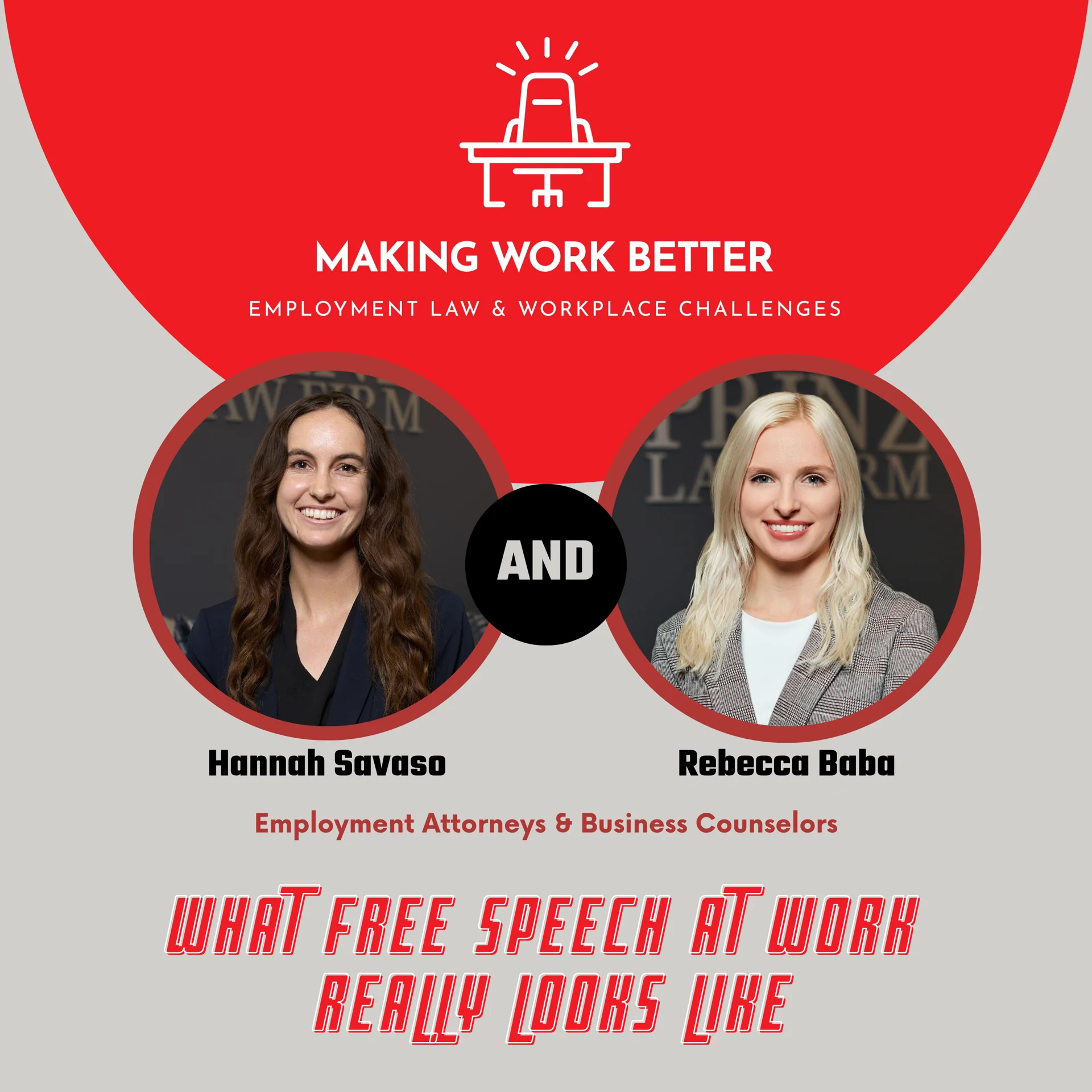
 Ep. 49 – What Free Speech at Work Really Looks Like
 -
Ep. 48 – What Can We Learn from Noma's Abuse Controversy?
-
Ep. 47 - An Attorney Guide to Using AI Responsibly
-
Ep. 46 - Did the EEOC Just Change the Definition of Harassment?
-
Ep. 45 - Illinois’ New Employment Laws of 2026
-
Ep. 44 – You vs. You: The Art of Negotiating Your New Year’s Resolutions
.png.2604281406308.webp)
.png.2604160924360.webp)
.1).png.2604160919572.webp)
.1).2601151011160.jpg)
.1).2512220820103.jpg)