


Chicago Workplace Gender Discrimination Lawyer
Understanding Your Rights in Chicago
As an employee, you should be aware that your employer is not legally allowed to treat you unfavorably on the basis of your gender. This includes any form of discrimination or any type of sexual harassment, whether it be physical, verbal, or otherwise.
Employers in Chicago are held to stringent standards under both state and federal laws, including Title VII of the Civil Rights Act, which prohibits workplace discrimination based on gender. Our comprehensive understanding of these legal frameworks allows us to effectively advocate for your rights.
A Chicago sexual harassment attorney can help you address gender discrimination and sexual harassment and inform you when you have a claim, while assisting you with all legal filings. Our dedicated law team at The Prinz Law Firm is highly competent at working with employees like yourself to ensure that your rights are not being violated.
Experiencing unwanted behavior or comments at work?
Call (312) 345-6603 or contact us online to speak with our sexual harassment lawyer in Chicago for confidential legal support today.

How The Prinz Law Firm Assists With Legal Processes
At The Prinz Law Firm, we believe in empowering our clients by providing clear guidance through each phase of the legal process. From initial consultation to the final resolution, we develop strategies tailored to your unique situation. Our team meticulously prepares all necessary legal documents, ensuring compliance with Chicago’s legal standards.
We engage in negotiations on your behalf, seeking amicable settlements whenever possible. If a favorable outcome cannot be achieved through negotiation, we are prepared to take your case to court in the Chicago legal system, where our comprehensive understanding of local laws ensures your best interests are protected.
Our firm is here to help you take legal action - contact us today or call (312) 345-6603 to request a free consultation with our Chicago sexual harassment & gender discrimination attorney.


The Prinz Law Firm's Podcast
-
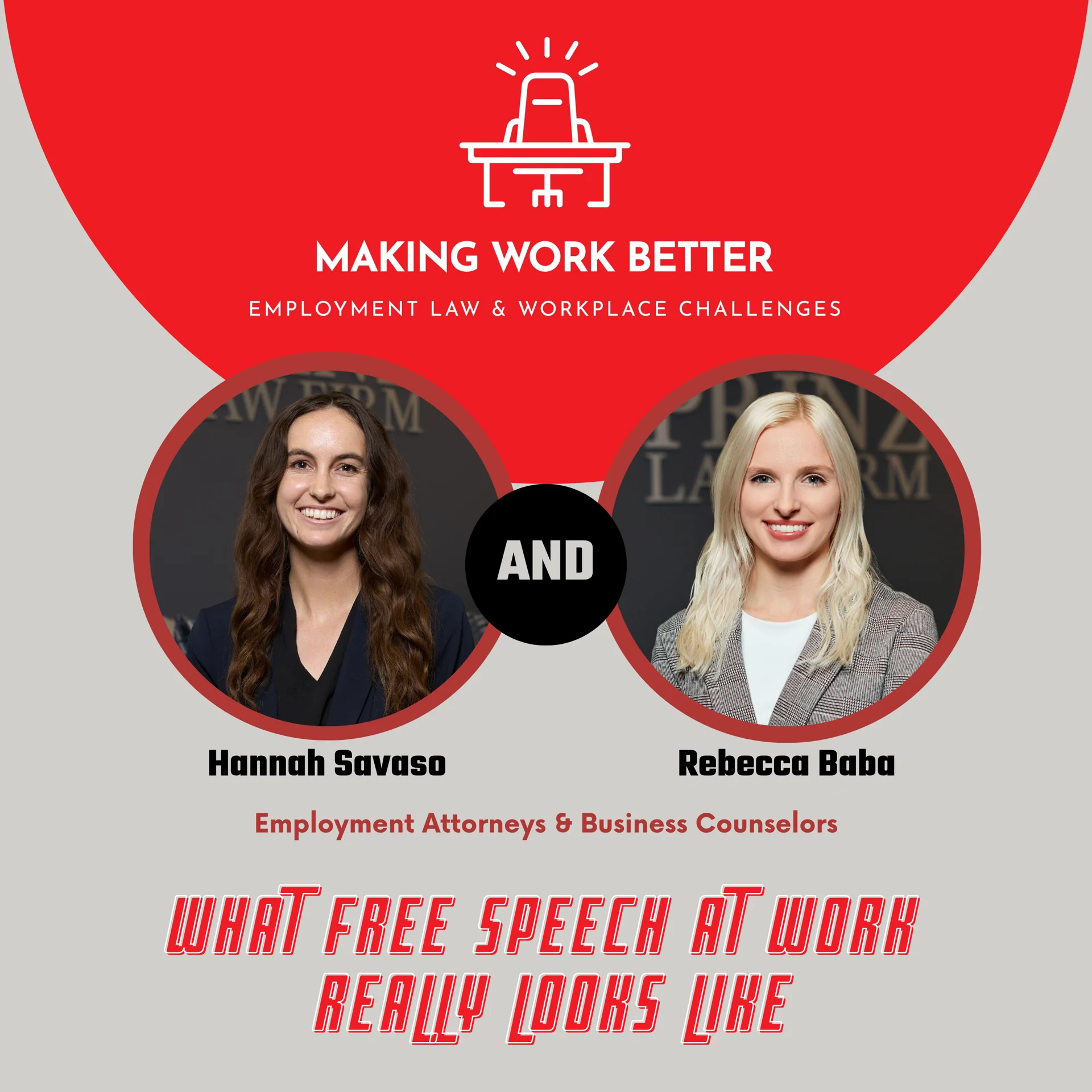
 Ep. 49 – What Free Speech at Work Really Looks Like
 -
Ep. 48 – What Can We Learn from Noma's Abuse Controversy?
-
Ep. 47 - An Attorney Guide to Using AI Responsibly
-
Ep. 46 - Did the EEOC Just Change the Definition of Harassment?
-
Ep. 45 - Illinois’ New Employment Laws of 2026
-
Ep. 44 – You vs. You: The Art of Negotiating Your New Year’s Resolutions
.png.2604281406308.webp)
.png.2604160924360.webp)
.1).png.2604160919572.webp)
.1).2601151011160.jpg)
.1).2512220820103.jpg)